Pi-Econ

  • | | | | | | | | | | | | | | |

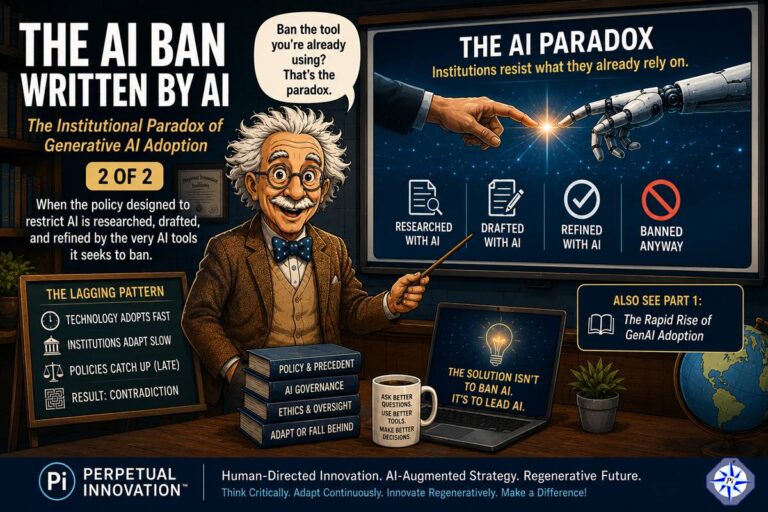
    The AI Ban Written by AI: Plagiarism, Policy, and the Ghost of Wikipedia

    Subtitle: Everyone is using GenAI. The real question is whether we can learn to use it honestly, wisely, and well. The policy says, “No AI.” The teacher used AI to draft the policy. The student used AI to interpret the policy. The administrator used AI to summarize the violation. The committee will now meet for…
  • | | | | | | | | | | | | | | | |

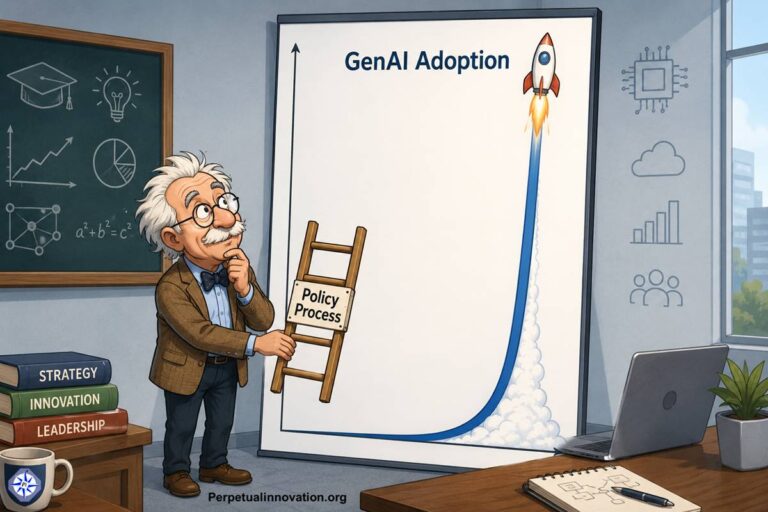
    The Adoption Curve Went Vertical: Why GenAI Is Different from Every Technology Before It

    Innovation used to arrive slowly enough for institutions to prepare. Generative AI did not wait. The telegraph needed poles. The telephone needed wires. The automobile needed roads, gas stations, mechanics, insurance systems, and a century of traffic laws. The personal computer needed desks, software, training manuals, and people willing to admit they did not know…

  • | | | | | | | | |

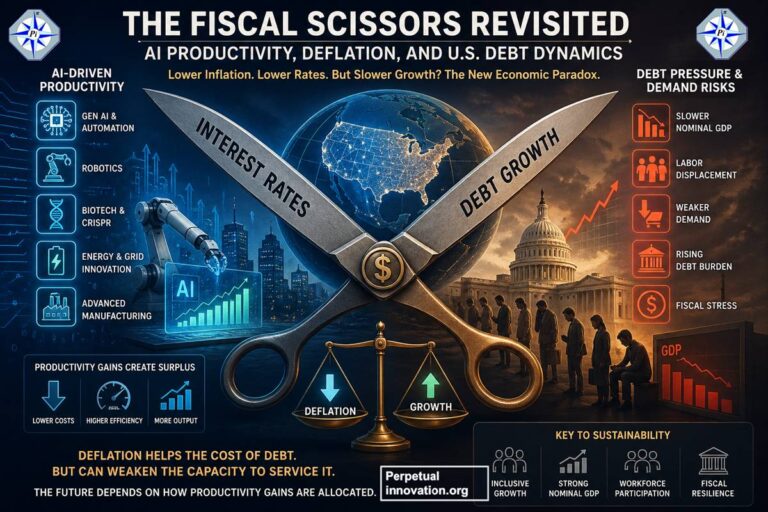
    The Fiscal Scissors Revisited: AI Productivity, Deflation, and U.S. Debt Dynamics

    Why rising productivity may ease interest rates—but complicate long-term fiscal sustainability Fiscal Scissors dynamics are evolving as AI-driven productivity reshapes the relationship between inflation, interest rates, and economic growth. What once appeared to be a straightforward tension between rising debt and higher borrowing costs is now a more complex system in which productivity gains simultaneously…

  • | | | | | | | | | | | | |

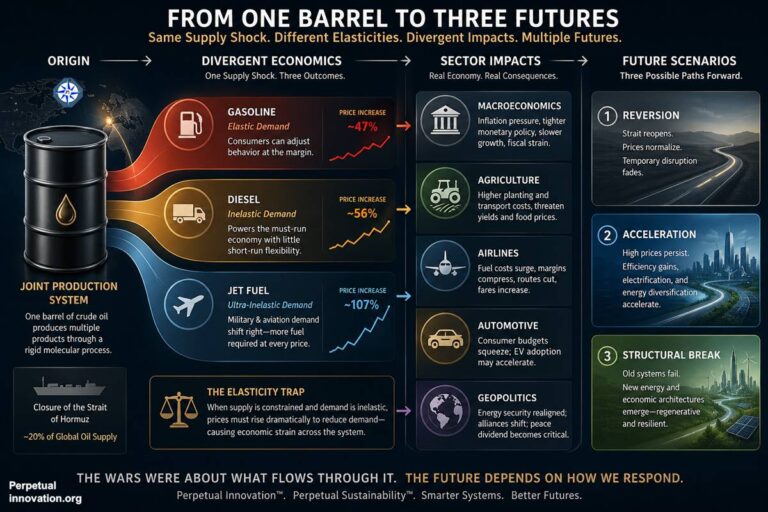
    The Inelasticity Trap: A Live MBA Case Study in Oil Supply Shock Economics

    A Pi-Econ™ Article | PerpetualInnovation.org Sofia had been up since 5:30 a.m., April 15, 2026, re-reading her notes on price elasticity. She liked managerial economics — it was the class where theory finally touched the ground — but Professor Aldrich had a habit of walking in with something from the news and asking the class…

  • | | | | | | | | | | | | | | | | | | |

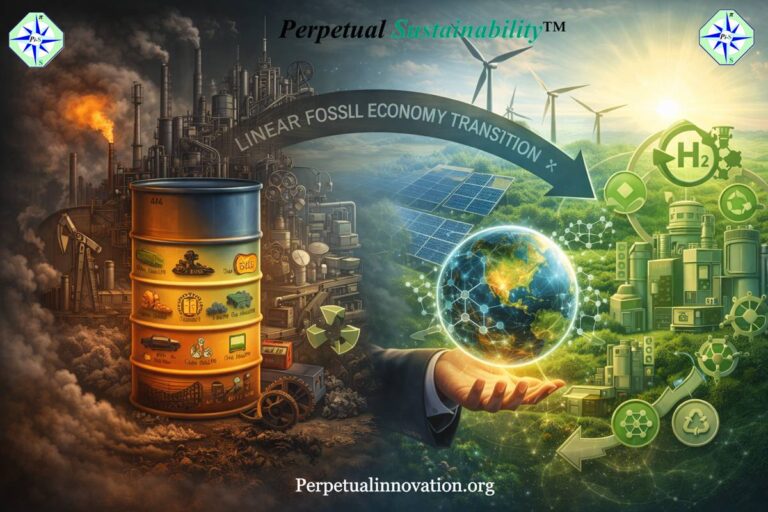
    Molecular Transition to a Regenerative Economy from Linear Fossil Fuel Systems

    Why sustainability requires redesigning industrial systems — not just replacing energy sources The defining sustainability challenge of the 21st century is not merely an energy transition — it is the molecular transition to a regenerative economy. Fossil fuels have shaped not only how societies generate power, but how industrial systems produce materials, infrastructure, and essential…

  • | | | | | | | | | | |

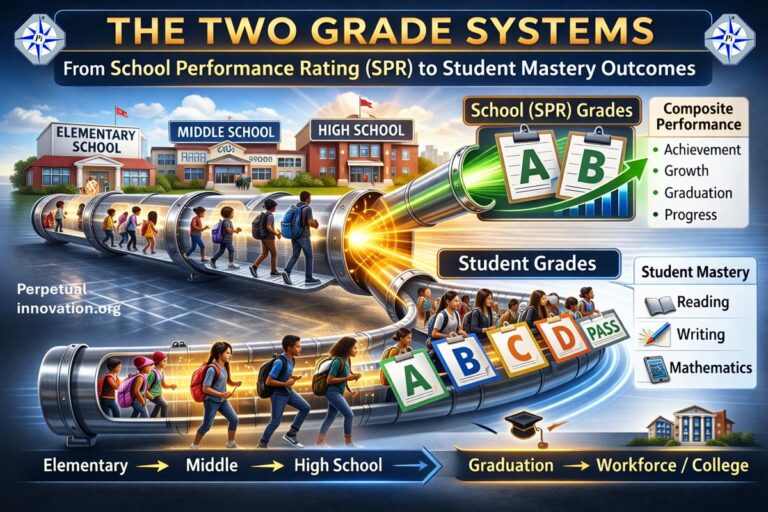
    When the Metric Changes but the Label Doesn’t

    School Performance Rating and the future of educational signal clarity School Performance Rating is the term we should be using to describe today’s composite school accountability grades. Florida officially refers to its A–F classifications as “School Grades,” but the underlying construct has evolved from a mastery-centered model to a multidimensional institutional performance system. Originally: A…