Celebrate Kindness (and Your Brain): The Unofficial U.S. Guide to the International Day of Kindness
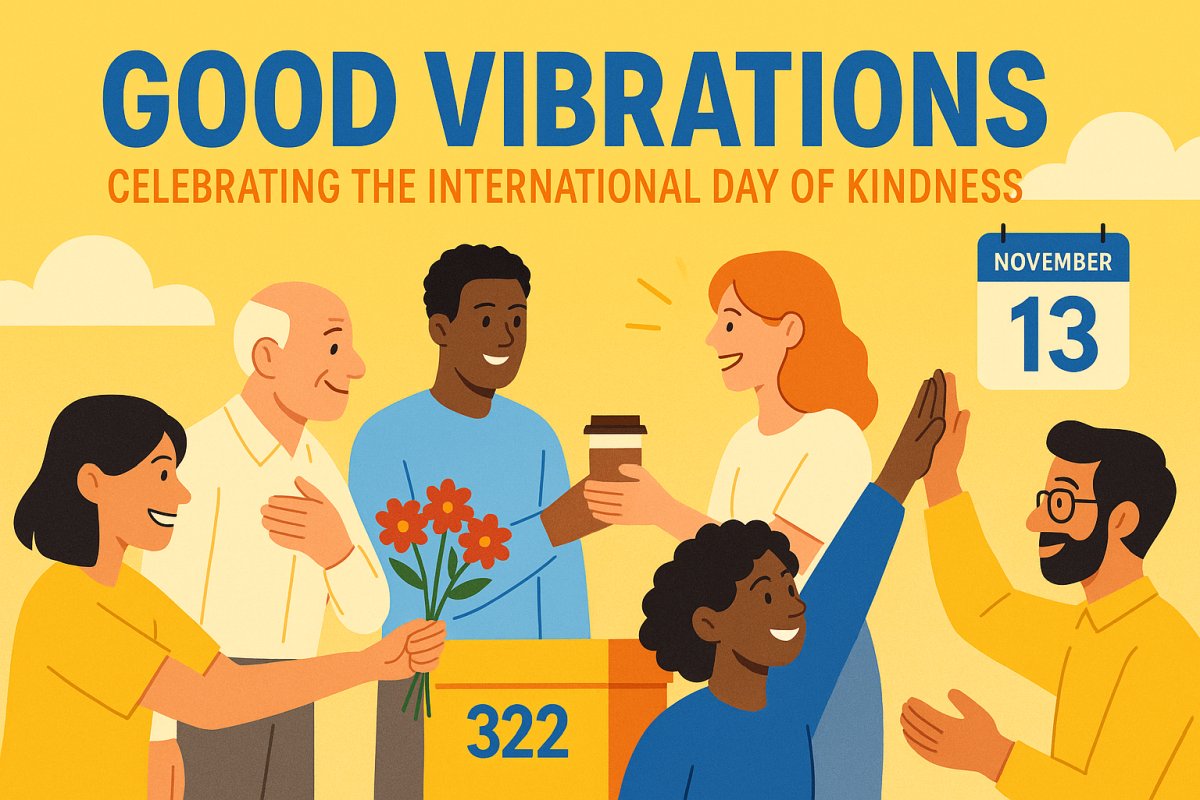
The International Day of Kindness—officially known as World Kindness Day, celebrated every year on November 13 (the 322nd day of the year)—is that rare global holiday the United States somehow forgot to make official. Which is ironic, considering Americans donate billions to charity, volunteer millions of hours, and could probably use a national reminder to be nice right before Black Friday. Here at Perpetual Innovation™, we’re celebrating anyway—because science says kindness lights up your brain with dopamine, oxytocin, and good vibrations. So even if Congress hasn’t passed the “Be Kind Act of 2025,” your neurons already have.
What Exactly Is the International (Not Quite American) Day of Kindness
World Kindness Day began in 1998 thanks to the World Kindness Movement, a coalition of organizations from around the globe that decided humanity deserved at least one guaranteed day to do good. Not a whole week, not a month—just one day when kindness takes center stage. It’s officially observed in countries like Canada, Australia, Japan, Nigeria, and the UAE. The U.S., on the other hand, has yet to formalize it—though we do have National Random Acts of Kindness Day on February 17 (because apparently, we need two tries). Still, schools, nonprofits, Rotary Clubs, and social-impact innovators across America join the celebration every November 13. Turns out, kindness doesn’t need federal recognition—it just needs willing participants and a decent coffee budget.
The Neuroscience of Kindness: Dopamine on Demand
When you do something kind—help a neighbor, donate, compliment someone’s Excel skills—your brain throws a neurochemical party.
The Science Bit
- Acts of kindness (or even witnessing them) activate the brain’s reward circuits, releasing dopamine, serotonin, and oxytocin—the famous “helper’s high.” (Cedars-Sinai, 2023)
- Studies in Nature Communications show a measurable link between generosity and happiness—the more generous the act, the greater the neural activation. (Nature.com, 2017)
- People who regularly engage in prosocial behavior report lower stress, longer life expectancy, and higher subjective well-being.
So, kindness isn’t just good for society—it’s a brain hack. You could say kindness is the world’s oldest self-administered dopamine supplement.
Turning Kindness into Strategy (and Donor Impact)
For nonprofits and social enterprises, kindness isn’t merely a moral virtue—it’s a measurable asset. In Nonprofit Management and Impactful Donor Giving (Hall, 2022), Dr. Elmer Hall emphasizes that strategic generosity enhances both mission alignment and donor satisfaction. When kindness is embedded into donor engagement, volunteers and contributors experience the same neurochemical rewards as the recipients. The result? A reinforcing loop of motivation, empathy, and sustained support.
Try This at Your Org
- Kindness KPI: Track “acts of appreciation” in your internal reports—thank-you notes, recognition moments, or small volunteer rewards.
- Donor Delight: Instead of just reporting outcomes, share stories of gratitude and connection to amplify the emotional payoff.
- Team Vibes: Start meetings with a “kindness round”—one positive observation about a colleague’s work.
- Boardroom Boost: Discuss how kindness metrics connect to donor retention and community trust.
The moral of the management story: kindness scales when it’s operationalized.
Humor Meets Humanity: How to Celebrate (and Not Miss) the 322nd Day
You don’t need balloons or matching T-shirts to join in—just intention and a sense of humor.
- Host a Kindness Flash-Mob (not the dancing kind): Have staff secretly deliver compliments, post sticky notes with “You’re Awesome” messages, or surprise colleagues with coffee.
- DIY Dopamine: After an act of kindness, stop for ten seconds. Note how your body feels. That’s the brain snapshot reinforcing your habit.
- Kindness Chain: Pass along “Kindness Cards” – each act recorded becomes part of a cumulative impact metric.
- Celebrate the Math: Brag that you participated in a global event on the 322nd day of the year—because precision counts, even in kindness.
If nothing else, the date makes for a great trivia question at your next Rotary lunch.
The Takeaway: Kindness as Innovation
World Kindness Day may not yet be a U.S. federal holiday, but perhaps it should be. After all, kindness fuels the very things our organizations rely on—trust, engagement, creativity, and resilience. So this November 13, give your brain and your community a boost. Offer a smile, a note, or a donation. Feel those good vibrations. Kindness isn’t soft strategy—it’s smart innovation.
Dynamic Links
Internal 1: Pi-Donor Impact
Internal 2: Pi-Nonprofits – Nonprofit Management
External 1: Cedars-Sinai – The Science of Kindness
External 2: Nature Communications – Generosity and Happiness Study
External 3: World Kindness Movement – Official Story
External 4: Random Acts of Kindness Foundation – World Kindness Day Resources
💡 Suggested GenAI Prompts
- “List 10 examples of simple, meaningful acts of kindness that could work well in [my organization] or [this office environment].”
- “Explain how dopamine and oxytocin affect motivation when people practice kindness or give to others.”
- “Create a short, fun Kindness Day challenge plan for employees or volunteers at [my organization].”
- “Describe how a nonprofit could measure or report kindness as a key performance indicator (KPI).”
- “Write a 100-word internal newsletter message encouraging kindness and teamwork at [my organization].”
AI Disclosure and Attribution
This article was co-created with assistance from the current version of ChatGPT-5 (November 2025) as part of the Pi-rdAI Rapid Strategic Planning ecosystem. Content development, review, and publication by Dr. Elmer B. Hall — Strategic Business Planning Company (SBPlan.com) and PerpetualInnovation.org.
Copyright © 2025 Strategic Business Planning Company®. All rights reserved.