
The Keeling Curve | How Much CO2 Can The Oceans Take Up?

The Keeling Curve | How Much CO2 Can The Oceans Take Up?: “Recent estimates have calculated that 26 percent of all the carbon released as CO2 from fossil fuel burning, cement manufacture, and land-use changes over the decade 2002–2011 was absorbed by the oceans. (About 28 percent went to plants and roughly 46 percent to the atmosphere.) During this time, the average annual total release of was 9.3 billion tons of carbon per year, thus on average 2.5 billion tons went into the ocean annually.”

So… of the 9.3 billion in CO2 emissions, the oceans have been absorbing about 26%. But, as in all things that reach saturation, this cannot be expected to continue.

We do know that CO2 will go into the air, since the atmosphere gets first go at fossil fuel emissions. So the Greenhouse gasses might start to rise much, much faster.

This certainly looks like a no-win.
‘via Blog this’

Similar Posts

  • |

    On the VERGE of Sustainability

     VERGE 20 is on this week (starting October 26 2020). GreenBiz sponsor and coordinate this massive event. Anybody and any company that’s got anything to do with sustainability is here. Well, not exactly here since it is virtual this year… But you get the idea. Opening session was a wonderful start of the week. Even the singing…

  • |

    Our planet is at a point of crisis – Leonard Pitts – Newsday

    Our planet is at a point of crisis – Leonard Pitts – Newsday: Leonard Pitts is going to get some hate mail out of this article. But, sadly, its all true. The only are that could be clarified a bit is the 97% of scientist agree. I think the agreement is that there is global…

  • |

    Economists costs will be sooner and bigger for global temps

    Here is what it kind of a think if we keep doing business as usual! Things could be worse and sinner than previously expected. http://www.sustainablebrands.com/news_and_views/new_metrics/mike_hower/economists_say_climate_impacts_will_be_worse_previously_believ?utm_source=Twitter&utm_medium=schtweets&utm_campaign=social

  • | | | | | | | | | | | | | | | | | |

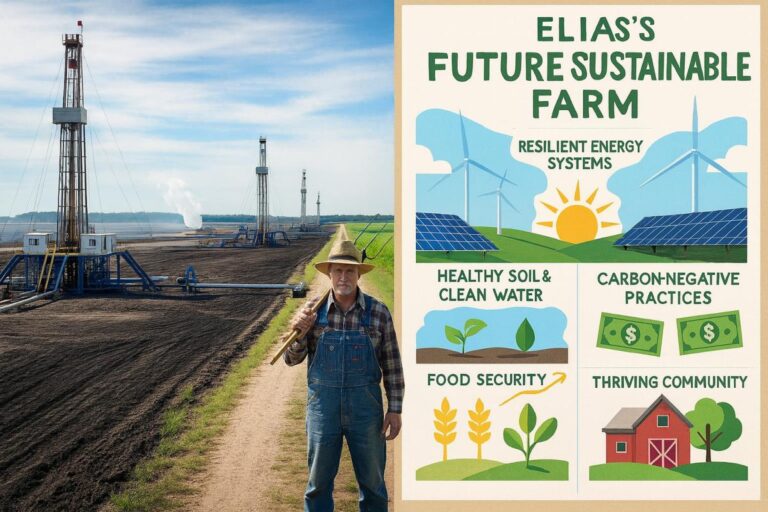
    Elias’s Future Farm: Building a Sustainable Legacy for 100 Years and Beyond

    From Choices to Legacy: the Future Sustainable Farm Elias, the Ohio farmer we met in recent scenario planning case studies, faces choices that mirror the world’s energy dilemmas: drilling for oil and gas, planting corn for ethanol, building solar and wind farms, or adopting regenerative agriculture. Each path offers rewards and risks, but as Elias…

  • Environment wins with reduced human activity

    There’s a silver lining, of sorts, in the reduced human activity related to the coronavirus shutdown. Nice visuals from space and discussion here: In The Midst Of A Tragic Human Pandemic, The Environment Is Flourishing https://truththeory.com/2020/03/19/in-the-midst-of-a-tragic-human-pandemic-the-environment-is-flourishing/ Move from lots of pollution to a beautiful clean sky. Very ugly way to get there, but the earth…

  • |

    Visuals of the planet changes

    These visuals of the planet changes over the last 30 or 40 years are impressive, to say the least. http://nbcnews.to/1uxF6ZM Here are some cool time lapse photography using satellite imagery over the last few decades. Check out the Amazon! Check out the glaciers! Ouch! Double ouch!